
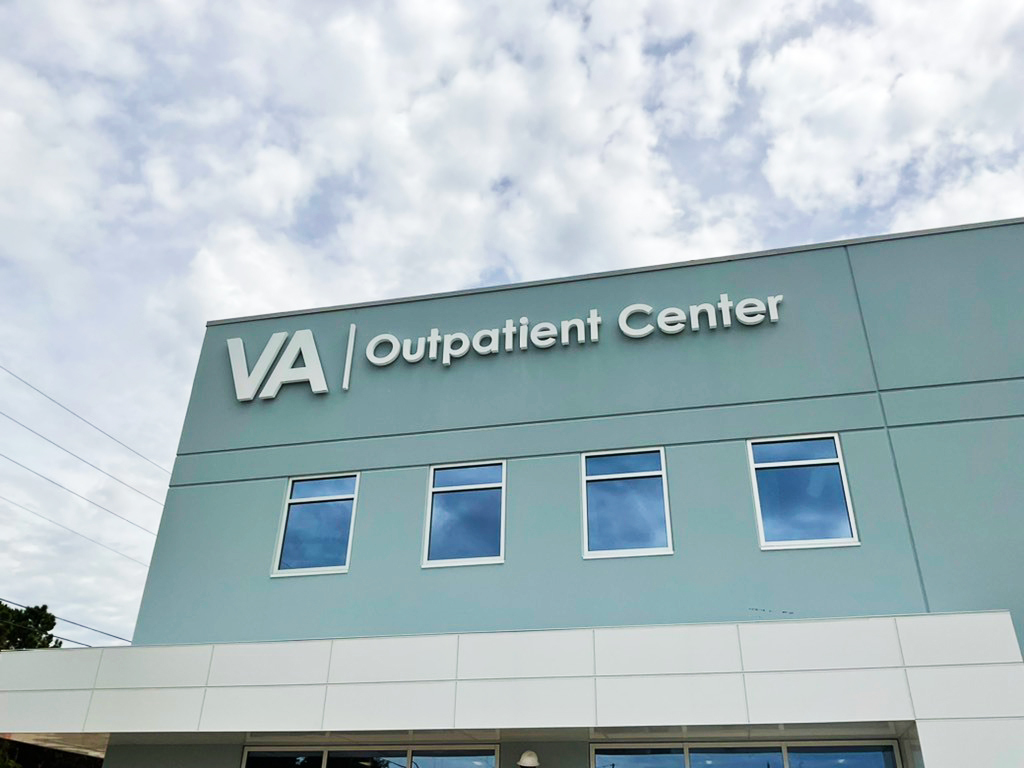
Hospital & Healthcare Wayfinding Signage: What Makes It Different
Hospital wayfinding signage carries a different level of difficulty than signage in most other built environments.
Three factors set healthcare apart:
- The emotional state of the people reading the signs
- The regulatory weight layered on top of standard building codes
- The fact that the facility almost never gets to close for construction
Each one changes how a signage system has to be designed, built, and installed.Why Do Signage Budgets Go Wrong?
Why Is Healthcare Wayfinding Harder Than Other Environments?
Patients and visitors arriving at a hospital or healthcare facility are rarely navigating on their own terms. They may be running late for an appointment, managing a health scare, or accompanying a family member through an unfamiliar building, often while dealing with mobility limitations, vision impairment, or a language barrier.
A national survey of US hospital staff found that confusing wayfinding creates measurable costs beyond visitor frustration, including lost staff time spent giving directions, missed appointments, and added security needs to keep people out of restricted areas.
Healthcare signage has to account for that added cognitive and emotional load. Clear hierarchy, consistent color coding, and compliant ADA signage direct traffic and reduce stress for people who have very little bandwidth left to spare.
How Do Code And Life Safety Requirements Affect Hospital Signage?
Hospital signage sits under more regulatory weight than most commercial environments. Emergency egress requirements, infection control material standards, and department-specific code requirements must all be considered on top of standard ADA and building code compliance. A signage partner has to understand both the design intent and the compliance detail, since a sign that looks right on paper can still create a permitting problem if it isn’t specified correctly. Getting this right early avoids costly rework once a facility is already under construction.
Considerations that come up repeatedly in healthcare projects include:
- Emergency exit and evacuation route signage
- Material selection for infection control and durability
- Multilingual and universal symbol requirements
- Mounting height and clearance standards for high-traffic corridors
Can Hospitals Update Signage Without Closing Operations?
Yes, but it requires a system built for it. Unlike most building types, hospitals rarely have the option to pause operations for renovation or expansion. Signage has to be modular and updatable in phases, department by department, without disrupting patient care or creating issues in wayfinding along the way.
A partner with project management experience who has run phased rollouts across multiple active facilities understands how to sequence fabrication and installation around a hospital’s operating hours.
Why an Experienced Signage Partner Makes the Difference
One Team, From Concept to Design: Creative Sign Designs’ in-house EGD studio carries healthcare projects from early wayfinding strategy through fabrication and installation under one roof. The continuity of our partnership cuts down on handoffs between vendors that create delays and inconsistent execution.
Fluent in Healthcare-Specific Compliance: We build egress requirements, infection control materials, and department-level code considerations into the process from day one.
Built for Campuses That Can’t Pause: Running signage rollouts across active operating campuses requires project management built around a hospital’s operating hours to keep phased work moving without disrupting operations.
Partnering With Creative Sign Designs For Healthcare Wayfinding That Works
Healthcare signage asks more of a design-build partner than most other environments. Creative Sign Designs has worked inside that complexity across hospital and healthcare projects of every scale, from Tampa General Hospital and MD Anderson Cancer Center to smaller medical clinics and specialty centers, balancing patient experience, code compliance, and phased construction without losing sight of the people the signage is meant to serve.
Get in touch with our team to talk through what your facility’s next phase needs.
What makes hospital wayfinding signage different from other commercial signage?
Hospital wayfinding signage has to account for visitors under emotional and physical stress, layered code and life safety requirements beyond standard ADA compliance, and a facility that rarely closes for construction.
These factors shape everything from material selection to installation sequencing in ways most commercial environments don’t require.
Can hospital signage be updated without disrupting patient care?
Yes, and the system is designed to be modular and installed in phases. A well-planned healthcare signage program allows departments to be updated one section at a time, keeping wayfinding consistent for patients and staff while work is underway elsewhere.