
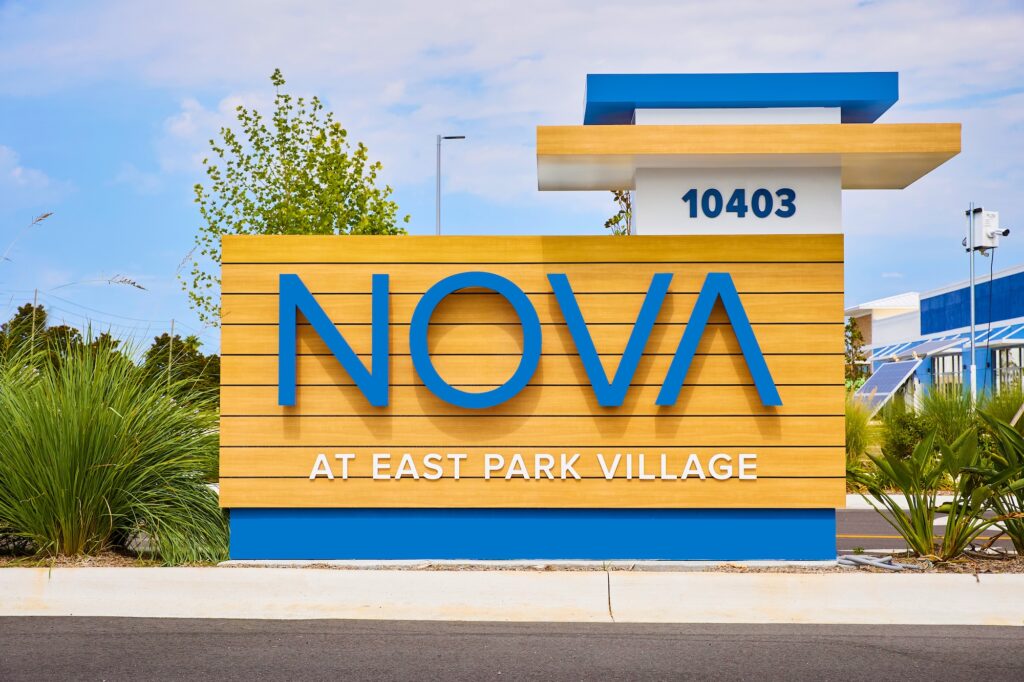
Commercial Sign Permitting Guide for Developers
In many Southeast cities, a sign permit is its own application reviewed by zoning staff on a separate timeline from the building permit.
The local sign code decides how big a monument can be, how far it sits from the curb, whether it can light up at night, and how much engineering it needs before anyone pours a footing. When those rules surface late, they tend to arrive as a costly and time-consuming redesign.
Below, we walk through how codes shift between markets and what keeps approvals moving on schedule.
Why Should Developers Plan for Sign Permitting Early?
Signage starts shaping a site well before anyone draws a sign. Wall sign allowances are often calculated from building frontage, so an elevation change can shrink the sign a tenant was promised. A monument sketched into a landscape island can land inside a sight-visibility triangle or on top of a utility easement.
Some jurisdictions build signage into the approval itself. Mount Pleasant, South Carolina requires a master sign program for multi-tenant developments, makes it a condition of development approval, and requires it to be processed before any sign is installed.
Creative Sign Designs’ EGD studio joins projects at the programming stage, when moving a sign ten feet costs a markup and a quick conversation.
How Do Sign Codes Vary Across Southeast Markets?
Sign rules are written city by city and county by county. Two parcels facing each other across a road can fall under different codes if one sits in unincorporated county land and the other inside city limits.
Many of these codes have also been rewritten over the years. After the Supreme Court’s 2015 decision in Reed v. Town of Gilbert struck down content-based sign rules, cities across the country rebuilt their ordinances. As a result, a sign package approved in a market several years ago may need a fresh look today.
Overlay districts bring in more reviewers. In Orlando, a sign in the downtown district or a historic district also goes before an additional review board.
Which Commercial Signs Typically Require Permits?
Plan on a permit for any permanent sign on the building or site:
- Monument or pylon signs
- Wall-mounted and channel letter signs
- Projecting signs
- Awning signs
Adding light to exterior signage usually adds an electrical permit. The City of Orlando requires every electrical sign to carry a listing from a recognized testing laboratory under the National Electrical Code, so the listing label needs to be on the cabinet by inspection.
Application rules vary, too. Martin County, Florida, requires a separate application for each sign, along with engineer-sealed plans for any sign 12 feet or taller. A site with six monuments will need six applications.
Before submitting, check with the planning or zoning office where the project sits, since it sets the requirements for that site. An experienced signage partner like Creative Sign Designs can also take on that legwork and catch conflicts before they reach a reviewer.
How Does Permitting Shape Signage Design and Budgets?
Every number in a sign code becomes a design constraint and eventually a line item. Some cities prohibit electronic message centers outright, which takes a digital pylon off the table before design begins. In hurricane-prone markets, such as those along the Gulf and Atlantic coasts, wind drives much of the cost. Signs there need sealed engineering to meet local wind-load requirements, which shows up directly in footing depth and pole size.
Build a realistic budget that carries engineering and permit fees plus a contingency for redesign, and research the code during design and planning to keep those figures steady as the project advances.
What Causes Sign Permitting Delays?
Incomplete applications cost more time than anything else. If your package is missing an owner authorization letter or a sealed engineering sheet, your submittal may be sent back. Some jurisdictions give applicants only a short window to correct a deficiency before the application is denied.
Each review board sets its own pace. Many meet monthly, so a missed agenda deadline could push approval back four weeks. A variance request usually adds a public hearing, and with it, another board calendar to wait on.
The costliest setbacks from a budget perspective come from code conflicts found after design is finished, when sign drawings and the architect’s elevations both need rework and the contractor’s schedule waits on the outcome.
How Can Developers Streamline Permitting Across Multiple Properties?
Start with a portfolio sign standard that sets the look across every property, and then adapt it to local codes site by site. A channel letter spec approved in one city could need smaller letters or a different mounting detail two counties over.
On multi-tenant sites, a master sign program helps you coordinate tenant signage. Depending on the jurisdiction, you may still need individual permits for each sign.
Working with one partner who tracks code and submittals by jurisdiction lets each new multifamily property or national rollout in your portfolio benefit from what the last one taught. CSD’s teams in Tampa, Florida, and Concord, North Carolina, work with jurisdictions across the Southeast and coordinate permitting for clients nationwide.
How Does a Design-Build Partner Support Permitting From Planning Through Installation?
Design-build puts design, engineering, permitting, fabrication, and installation on one team, so the code shapes each sign from its first sketch. That team works through reviewer comments and verifies the finished install matches the approved drawings before final inspection.
CSD has spent 40 years doing this work with design and fabrication in-house, so a sign program can flex to each jurisdiction and still read as one brand from property to property. Our 99% on-time delivery rate keeps signage from holding up close-out.
Talk to our team while your site plan is still taking shape.
Do Interior Signs Need a Sign Permit?
Zoning sign permits generally cover exterior signage. Illuminated interior signs may still need an electrical permit, and ADA standards call for tactile signs at permanent rooms and exit doors.
What Is a Sign Variance, and When Is One Needed?
A variance grants relief from a specific code requirement when strict compliance doesn’t work for a particular site. It’s usually needed when site conditions, such as a deep setback or grade change that blocks visibility, keep a sign from meeting the code’s size or placement limits.