One Brand, Different Properties: Why Consistency Does Not Mean Sameness
Brand consistency matters across every property. Guests should recognize the brand, understand the environment, and experience the same level of quality from one location to the next.
But consistency does not mean every property should look the same.
A boutique hotel, a historic renovation, a new-build resort, and an urban high-rise may all require very different signage approaches while still staying true to the same brand.
Those differences go well beyond geography. Building age, architectural style, local materials, surrounding development, guest expectations, operational needs, and code requirements can all influence how a brand should be expressed. The challenge is allowing each property to respond to its environment without losing the standards that make the brand recognizable in the first place.
Different Properties, Different Applications
That difference becomes much easier to see when you look at completed projects side by side.
Current Hotel and Epicurean Hotel both fall within Marriott’s Autograph Collection, while JW Marriott Tampa Water Street and JW Marriott Clearwater Beach share the JW Marriott brand. The brand connection is clear, but the signage programs are not interchangeable.
Each property required a different response to the building, the guest experience, and the role signage needed to play within the environment.
Current Hotel
Current Hotel takes a clean, contemporary approach that reflects the architecture and atmosphere of the property.
The signage follows the same direction. Exterior identification is bold enough to establish the property from a distance, while the interior program is quieter and more restrained. The result feels coordinated with the building rather than applied on top of it.
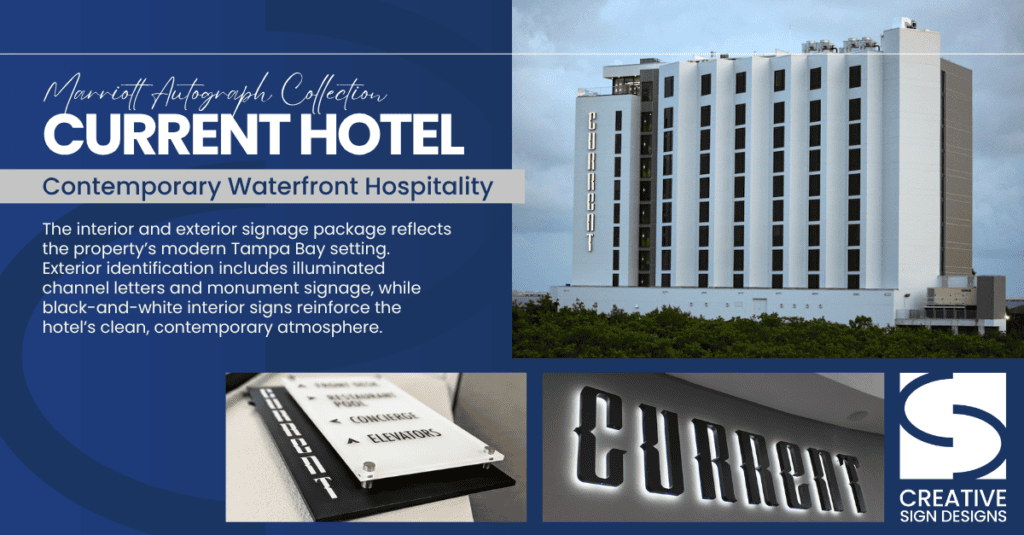
The brand is recognizable, but the property still has room to establish its own identity.
Epicurean Hotel
Epicurean Hotel takes a very different approach.
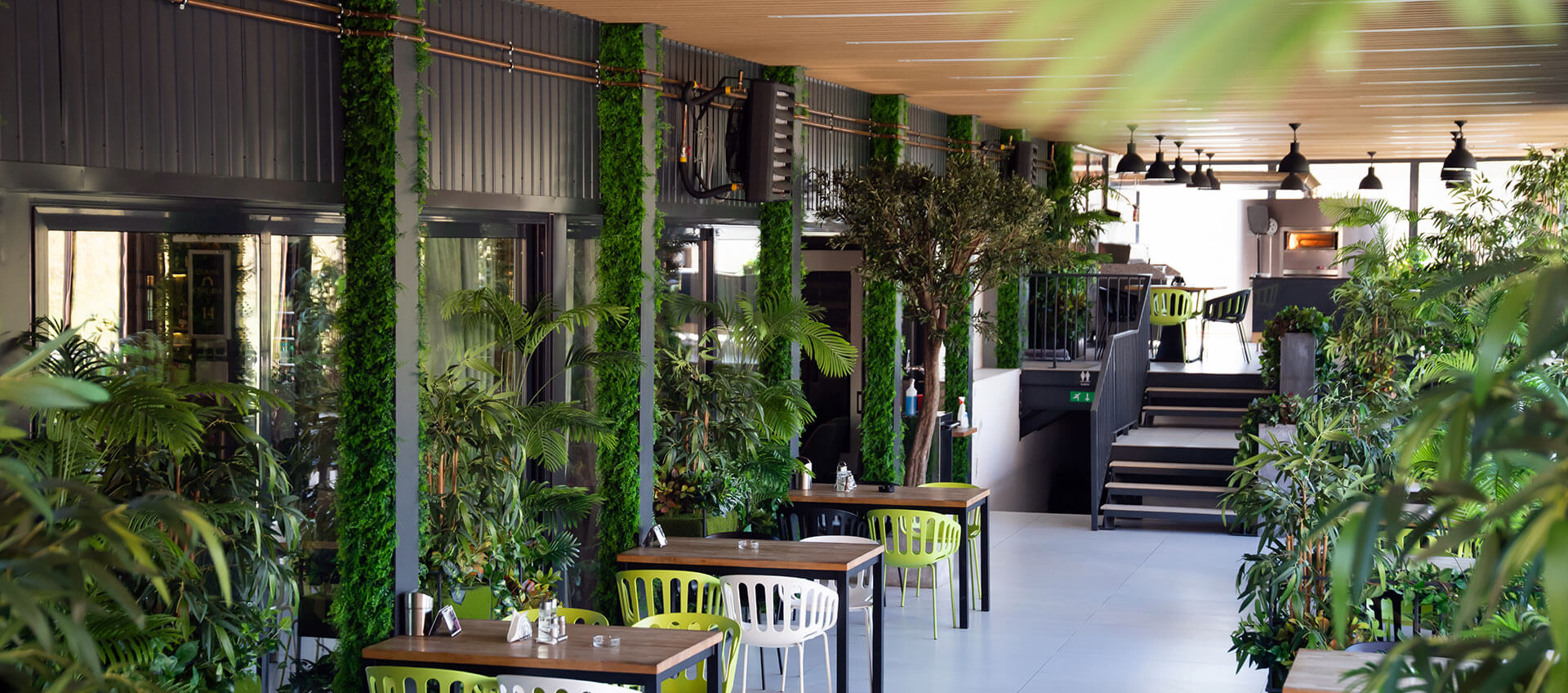
Here, the property’s culinary identity becomes part of the signage itself. Materials and details such as cork, cutlery-inspired elements, wine references, custom lettering, and specialty signage create a visual language that feels specific to the guest experience.
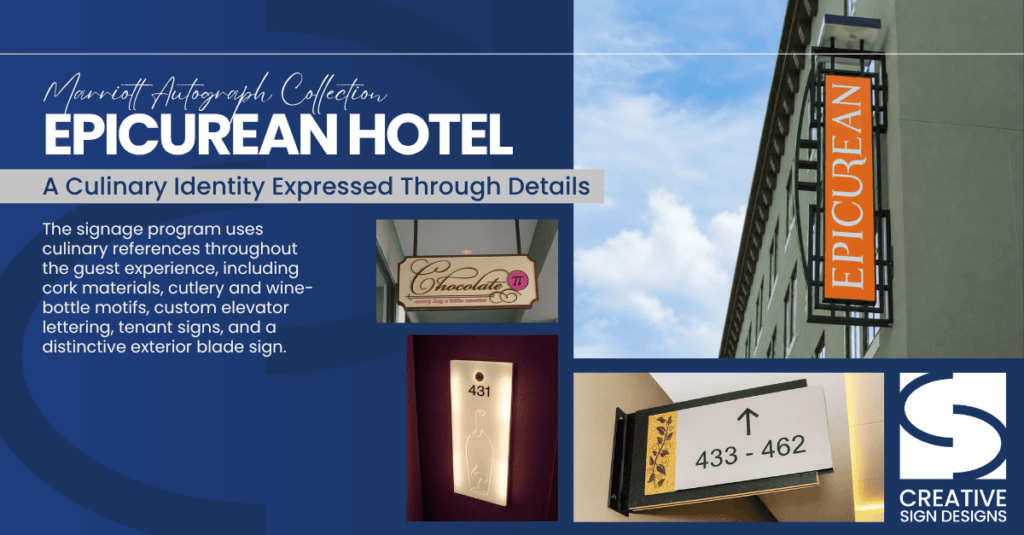
The execution is more expressive, but it still operates within the expectations of the larger brand.
That is the distinction: consistency comes from maintaining the right standards, not repeating the same design solution.
JW Marriott Tampa
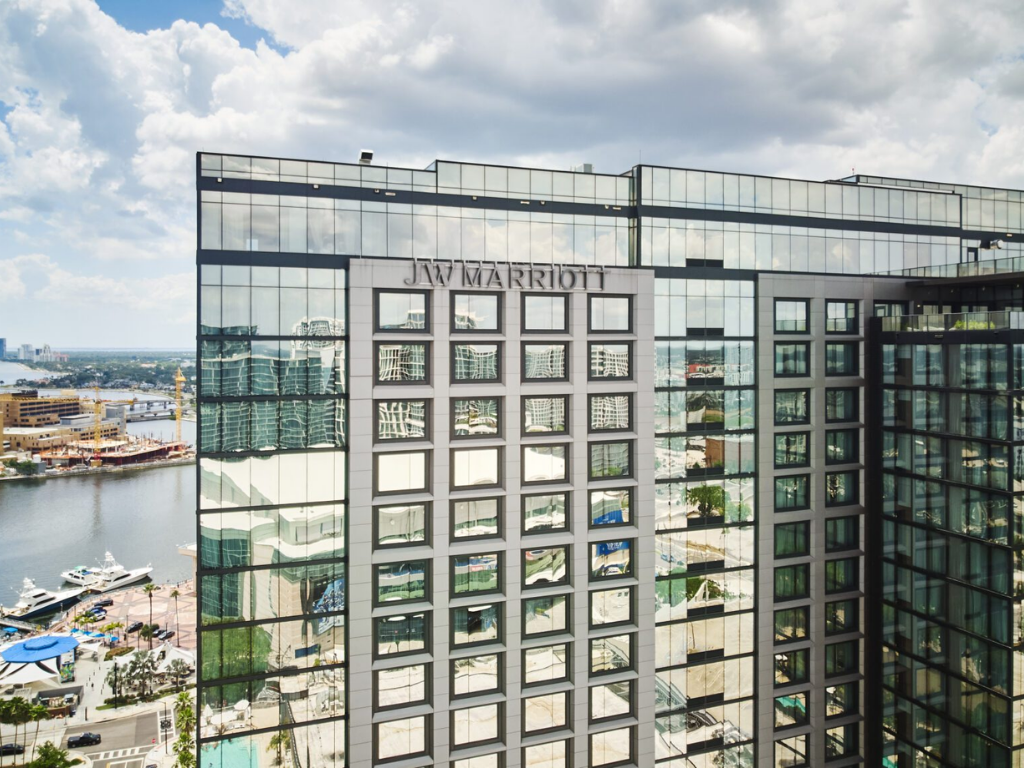
JW Marriott Tampa Water Street shows another side of the same idea.
The scale, architecture, and urban context call for signage that feels polished, architectural, and integrated into the property. Instead of competing with the environment, the signage supports the sense of arrival and reinforces the elevated guest experience associated with the JW Marriott brand.
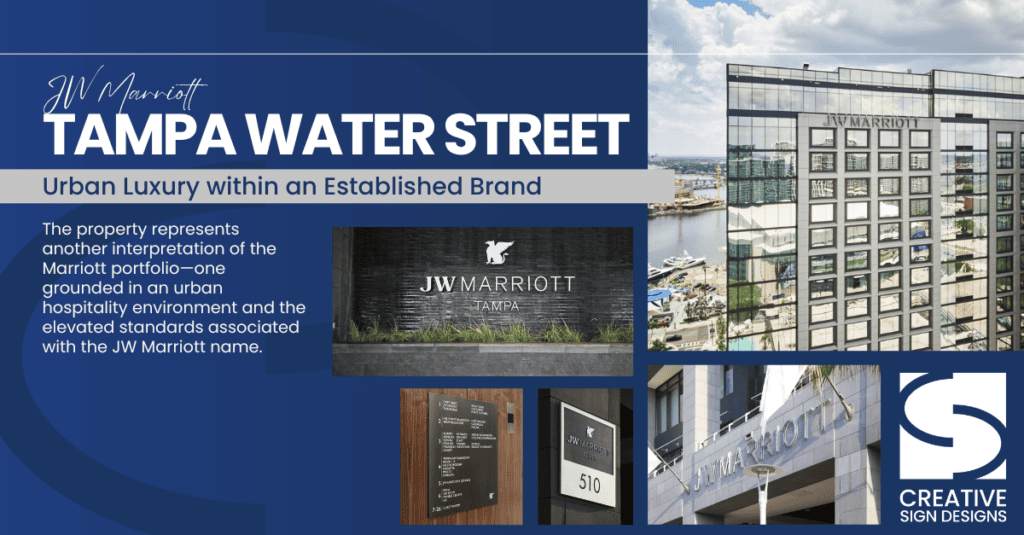
The property remains unmistakably JW Marriott, but the way the brand is expressed responds to the building around it.
JW Marriott Clearwater Beach
JW Marriott Clearwater Beach required a broader signage program across a resort environment, including façade identification, monument and directional signage, life-safety signage, and photoluminescent stairwell signage.
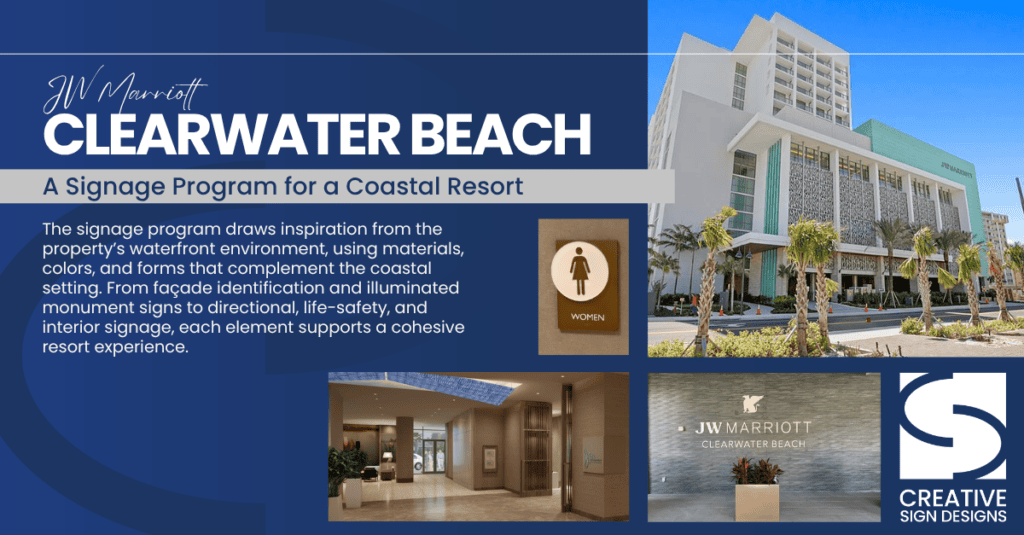
The setting, circulation patterns, and operational needs are very different from an urban hotel, so the signage has to work differently as well.
What Stays Consistent is the Process
The signage may change from one property to the next, but the expectations behind it should not.
Brand recognition, material and production quality, guest experience, and overall execution still need to feel consistent across every location.
The challenge is managing all of the decisions required to make that happen.
Different properties may call for different materials, sign types, mounting conditions, approval paths, schedules, and installation approaches. When those decisions are managed separately, the burden often falls back on internal brand, construction, and facilities teams.
Partnering with CSD brings those decisions under one roof.
We help brands interpret standards, adapt them to site-specific conditions, coordinate the details, and carry the program from planning through installation. That gives internal teams a single partner to guide the process while helping protect consistency across every property.
The result is not sameness. It is a more controlled, repeatable approach to implementing the brand wherever it needs to go.
Consistency Without Sameness
Strong national brands are recognizable wherever they appear, but the best physical environments do not feel copied from one location to another.
They feel considered.
The signage responds to the architecture. It supports the guest experience. It meets the operational needs of the property. And through all of those differences, the brand remains intact.
For multi-location brands, that is the goal: not identical execution, but consistent execution.
A trusted signage partner helps make that possible by protecting the standards that matter, adapting the details that need to change, and managing the coordination required to bring both together across every property.
That is how one brand can show up differently from place to place—and still feel unmistakably like the same brand.